|
|
ً
"Dominion belongs unto God (al-mulk li-llāhi). He gives dominion (al-mulk) unto whomsoever He wills and He divests dominion (al-mulk) from whomsoever He wills. And He, God, is powerful over all things (cf. Q. 3:26a)." (QA 3:20) The Sūrat al-mulk (= QA1) is pictured in many Bahā'ī sources dependent on Muhammad Nabil-i Zarandī's history (as redacted by Shoghi Effendi in the 1932 and later editions as `The Dawn-Breakers') to have been revealed by the Bāb on the evening of his encounter with the young Shaykhī seeker Mullā Ḥusayn Bushrū'ī (d.1265/1849) in his house in Shiraz on the evening of 5th Jumādi al-Ūlā [Awwal] 1260 or the evening of May 22nd 1844 (Dawn-Breakers, 61ff). In neo-qur'ānic fashion QA1 opens with the standard Islamic basmalah (= Bismillah al-raḥman al-raḥim, "In the Name of God, the Merciful, the Compassionate") though without any prefixed isolated letter(s) such as appear before 28 sūrahs of the 114 Sūrahs of the Q and most of the other 111 Sūrahs of the QA (except, QA 1, 52, 64, 67, 74). No single qur`ānic verse from Sūrah 12 prefixes QA1 as is the case before all of the other sūrahs of the QA which usually late in the sura comment upon a specific verse of the Surat Yusuf (Q. 12) often in succinct "rewritten" expository or "re-revealed" (waḥy) fashion. As QA1 has no isolated letters it can be considered a kind of prolegomenon to the QA proper perhaps like the first Qur'anic sura the Sūrat al-Fāṭiha (Q. 1), which is similarly without prefixed isolated letters). Every subsequent Sūrah of the QA from QA2 until QA111 encompasses successive, verse by verse, comment upon the whole of the Sūrah of Joseph (= Q. 12:1-111). Hence the QA is entitled the Tafsir or Sharh Surat Yūsuf and offers a complex non-literal messianic exegesis-eisegesis of Q. 12 in the light of the imminent eschaton, end of the age. It is thus appropriate that the first sura title of the QA is surat al-mulk since the world mulk has to do with current world order and means 'dominion', `sovereignty', `kingdom' or the like. From the Arabic root m-l-k a large number of expressions are derived having to do with kingship, kingdom, rule and dominion, including mālik (= king, master), malik (king, King [= God]; pl. mulūk), malakūt (kingdom) cf. Malak (angel[s]), pl. Mala'ika (angels), etc. The first sūrah in all of the the ms. of the QA that I have seen is entitled Surat al-mulk. This title evidently has to do with mulk as the `rule', `dominion', `sovereignty' or `kingdom of God' in the light of the onset of a new age, that of messianic and eschatological fulfillment. The Bab opens his important initial revelation with a note indicative of the transference of divine sovereignty, mediated by the Hidden Imam and himself as representative of God. The kingdoms of this world are about to return to God since his representatives (the Hidden Imam and the Bab) are communicating with humankind and its leaders calling them to hear the new message of God. In verse 22 of QA1 it is clearly announced that mulk, the kingdom belongs to God and his earthly and celestial representatives, the Bab and the Hidden Imam. On behalf of God, they claim sovereignty of the world. Earthly dominion no longer belongs to worldly kings and potentates. In fact the word ملك mulk occurs no less than a dozen times in QA1. It is appropriate that the Bab commences his massive commentary with a chapter announcing the imminent realization of the Kingdom of God on earth for QA1 is not just an exercise in tafsir (Qur'an commentary) but the communication of a new repository of divine revelation reinterpreting in eschatological terms the Islamic Qur'an.
The first occurrence of ملك mulk is half-way through QA1, in verse 22. Here the worldly, kingly rulers of this world, are told to relinquish their claim to sovereignty in the light of a new expression of eschatological ḥaqq, truth or "reality" :
يا معشر الملوك و ابناء الملوك انصرفوا عن ملك اللّه جميعكم بالحقّ علی الحقّ جميلاً
"O concourse of kings and the sons of kings! (yā ma`shar al-mulūk wa abnā' al-mulūk)
It two verses later at QA 1: 26 that the Bab addresses Muhammad Shah (r.1834-1848) as the malik al-muslimūn, (loosely translated) “O king of Islam!” (BWC) (lit. "king of the Muslims", malik al-muslimūn)who has been invested with worldly mulk (sovereignty). He bids him aid the supreme, messianic Dhikr (Remembrance on the yawm al-qiyāma (“Day of Resurrection”) in the task of the sakhira (`making subservient' or `subduing'; taskhīr = subjugation, subjection) of the bilād (countries, lands, regions). According to the next verse QA 1:27 his own mulk should not, however, deceive him for he is a mere mortal. And QA:1:28 has it that, according to the umm al-kitāb (the Archetypal or Mother Book) mulk is now invested with the messianic Dhikr. Then QA 1:29 reads, و انصروا اللّه بانفسكم و اسيافكم فی ظلّ هذا الذّكر الاكبر
لهذا الدّين الخالص بالحقّ علی الحقّ
قويّا
“And [O kings!]
give aid towards victory before God through thy very own selves and thy
swords (bi-anfusikum wa asyāfikum) in the shade of the Most Great
Remembrance (fi zill hadha al-dhikr al-akbar) for the sake of this pure Religion
(al-dīn al-khāliṣ) which is, in very truth, mighty.
At QA 1: 30 attention is given to the role of Ḥajjī Mīrzā Āqāsī
(c.1783-1848) addressed as "O Minister of the Shah! [King] (wazīr
al-malik)” Fear thou
God, besides Whom there is none other God but Him, the Sovereign Truth,
the Just, and lay aside thy dominion (al-mulk), for We, by the leave of God, the All-Wise,
inherit the earth and all who are upon it (cf. Q.19:41), and He shall
rightfully be a witness unto thee and unto the Shāh [King] (al-malik )."
(SWB:42-3) "Were ye to
obey the Remembrance of God (al-dhikr) with absolute sincerity, We
guarantee, by the leave of God, that on the Day of Resurrection,
a vast dominion (al-mulk an `aẓīm an) shall be yours in His eternal Paradise (jannat
al-`adn, Garden of Eden)."
QA 1:32
reminds world rulers that "Vain indeed is your dominion mulk [O Kings!]
while QA 1:33 reads :
“With Us is an
elevated dominion
(al-mulk an rafī` an ) in the Garden of
Eternity (jannat al-khuld) which We bestow upon such as We desire
among Our servants such, that is, as are established in this Gate
(al-bāb) by God and in very truth, an upholder of His verses”
Many other references to mulk are to be found in
the QA and other writings of the Bab. One example from QA 3 (the Sūrat
al-Īmān) verse 20 reads: و انّ الملك للّه يؤتی الملك من يشإ و ينزع الملك عمّن يشإ و هو اللّه كان علی كلّ شیء قديراً
The Bāb raises the call “al-mulk li-llahi” ("Dominion belongs to God!") and calls for kings, leadres and other human beings to assist him in its evolution and development. They must conquer all powers and forces by means of "holy war" and proclaimatory activity in order that all can acknowledge the eschatological rule of God. Qur'an Sura 67 is entitled Surat al-mulk and after the basmala the first verse reads as follows : تَببَكَ ٱلَّذِى بِيَدِهِ ٱلْمُلْكُ وَهُوَ عَلَىٰ كُلِّ شَىْءٍۢ قَدِيرٌ
The word mulk occurs about 48 times in the Qur'an. Several of its texts underline the belief that earthly and cosmic مُلْكُ mulk ("rule", "dominion", "sovereignty") properly belong to God. Qur'an 2:107 reads:أَلَمْ تَعْلَمْ أَنَّ اللَّهَ لَهُ مُلْكُ السَّمَاوَاتِ وَالأَرْضِ وَمَا لَكُم مِّن دُونِ اللَّهِ مِن وَلِيٍّ وَلاَ نَصِيرٍ
This qur'anic sentiment is paralleled by at least fifteen other verses, including, Q. 3:189 (186); Q. 5:17-18 (20-21); Q. 5:40 (44); Q.5:120; Q. 7:158; Q. 9:116 (117); Q. 24:42; Q. 42:49 (48); Q. 43:85; Q. 45: 27 (26); Q. 48:14; Q. 57: 2, 5; Q. 85:0 (cf. Q. 40: 16, 29). It is specifically predicted in Q. 22:56 (55) and Q. 25:26 (28)' that on the eschatological Day of God the mulk will again "belong to God": الْمُلْكُ يَوْمَئِذٍ لِّلَّهِ يَحْكُمُ بَيْنَهُمْ فَالَّذِينَ آمَنُوا وَعَمِلُوا الصَّالِحَاتِ فِي جَنَّاتِ النَّعِيمِ
These latter day qur'anic predictions about the mulk of God obviously find resonance and fulfillment in the Surat al-mulk of the QA. Both Sunni and Shi`i Islamic sources anticipate the rule of God on the Day of Resurrection (yawm al-qiyama). Recited daily countless times throughout Islamic history Q 1:4 مَـٰلِكِ يَوْمِ ٱلدِّينِ expresses in realized eschatological fashion the hope and anticipation of the latter-day theophanic rule of God. In his Tafsīr on Q. 1:4 the two Jalāls (Jalalayn = Jalāl al-Dīn Muhammad ibn Aḥmad al-Maḥallī (d. 864/1459). and Jalāl a-Dīn `Abd al-Raḥman al-Suyūṭī (d. 911/1505) comment as follows:
There are many further Islamic writers and texts which make insightful comment upon the implications of the Qur'anic word mulk and associated terminology (see Kassis, Concordance, 765-768). The Name of God al-Mālik meaning "the King", "the Ruler" is important in Islamic theology. It is the fourth of the ninety-nine al-asmā’ al-ḥusnā (“Most Beautiful Names” [ of God]) while the eighty fourth of these special Names is the theologically loaded genitive phrase the Mālik al-Mulk , the “Ruler of Kingdom” or the “King of the worldly dominion". The forty or more Islamic theologians and philosophers (including Ibn Barrajān; Abu Bakr al-Bayhaqī; Abu Ḥāmid al-Ghazzālī and Fakhr al-Dīn al-Rāzī) who have commented upon the al-asmā’ al-ḥusnā have set down detailed references on the theological implications of these and related divine Names (see Hajji Khalifa, Kashf al-zunun [ed. 2008], 2: 314-217 nos. 7908-7939). An example of the
The Mulk (Dominion) in Select later Babi-Baha'i scriptural writings There are numerous Bābī-Bahā'ī scriptural writings which develop the theme of the eschatological realization of the Kingdom or reign of God on earth. The establishment of some form of theocracy attendant upon the Bābī-Bahā'ī theophany or divine manifestation on the Day of God is indicated may times. Only a few relevant passages can be set down here. In the preamble of a scriptural Tablet of Baha'u'llah to His eminence (ḥaḍrat) Ism-i Zayn, dated 18th Dhu'l-Ḥijja 1300 = 18th October 1883 CE., (a little less than a decade before his passing in May 1892 CE) we find some remarkably apposite theological uses of the m-l-k root relative to eschatological fulfillment and the realization of the latter day "reign" or sovereignty of God:
URL: Sūrat al-`ulamā' = The Surah of the `Ulamā'
Derived from the triliteral root `-l-m (to know, etc) the various meanings and sense of the word `ulamā' are well known. The `ulamā' -- learned, clerics, divines, religious leaders, etc -- are the learned guides or authorities in the religion of Islam. Some of course are more intellectually learned or brilliant than others. Throughout Islamic history many have been paragons of true learning and virtue. Others have fallen short of their high religious office. The Bab calls the `ulama' to true piety and to `fear God' which spiritual quality has long been lauded as the acme of wisdom in numerous authoritative ḥadith and related texts. A few paragraphs into QA 2 at verse 13 there is the following address : يا معشر العلماء اتّقوا اللّه فی آرائكم من يومكم هذا فانّ الذّكر فيكم من عندنا قد كان بالحقّ حاكماً و شهيداً
In sura two, the Bab moves to those persons who were ordinarily the centers of worldly power, the `ulamā', and addresses them in the surat al- `ulamā'. Just as in the first Surat al-mulk (QA.1) he had undercut the terrestrial rule of kings and potentates, in sura two likewise, he all but demolishes the role of the Islamic `ulamā’ and other clerical and related members of the Abrahamic religions of the Book. Authority and religion are no longer belong to human beings but are focused in God and his messianic representative on earth who in the new eschatological age communicate authoritative guidance for the peoples of the world. For the Bāb the era of the `ulamā’ as earthly representatives of God is terminated. There is no longer any need for marja al-taqlid, mujtahids, `Ulamā’, Fuqahā’ or Akhund, etc. The authority of priests in religious and other areas is superseded by a new divine revelation as the basis of divine guidance. Human loci of authority and patterns of guidance are no longer appropriate in the new Babi era of direct communication with the loci of Imami guidance. At or around verse 22 of the Surat al-`ulama', the Bab addresses the non-muslim "people of the Book" (ahl al-kitab) calling them to humility and exhorting them to focus upon the messianic Dhikr (Remembrance): يا ايّها الملأ من اهل الكتاب اتّقوا اللّه و لاتغترنّ بعلمكم و اتّبعوا الكتاب من عند الذّكر* مبين
The individual learned divines among the Jews and Christians, etc., must likewise turn for guidance to the new Book of the new eschatological age. In QA 1-2, rulers and individual sources of authority must relinquish their worldly reign and religious authority.
(3) = Sūrat al-Īmān ("Faith", "Belief") QA. 3 on Q. 12:2. الايمان Sūrat al-īmān = The Surah of Security This word al-īmān meaning "faith" or "belief" and "security" (cf. "the secure place") is not found in QA3. As Abu'l-Qasim Afnan notes in his book `Ahd-i A`la (p. 89; 155 fn.28) Shiraz and the house of the Bab there are associated with the Qur'anic phrases bilad al-āmin (Q. 2:125-6) and dar al-amin ... Add here.. In this respect one might refer to the Tablet or Letter of the Bab to the leading Shaykhi and anti-Babi Mulla Hasan Gawhar
Mubāhala ('Mutual execration') : In one mss., of Azali provenance (EGB F.11) this 3rd Sura of the QA is entitled the Surat al-mubahala or the `Sura of mutual execration'. The alternative cannot be speedily rejected because the word al-īmān is nowhere found in QA.3 While QA.1 has to do with the realization of the rule of God over the world, QA2 revolves around the clerical loss of power over the world of the faithful in favor of a new standard of eschatological divine guidance. QA3 raises the status or position of "true belief" or "secure faith" which is put to the test. This especially when there is reference to al-mubāhala ("mutual execration") in truth determination. The severe, hellish punishments for lack to receptivity to the message of God through the hidden Imam and the Bab are here depicted in graphic neo-qur'anic fashion.
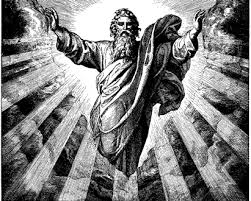
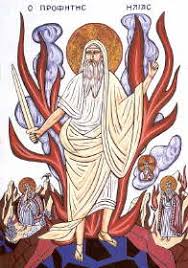
At QA3:40 there is reference to a possible eschatological trial of faith, a mubāhala ("mutual execration", tabāhila) with the unbelievers. Towards the end of QA.3 the Bāb uses a verbal form indicative of mubāhala (`mutual execration’), namely, tabāhila relative to his Islamic opponents. He rewrites Q. 3:61b = thumma nabtahil fa-naj`al` la`nata Allāh `ala al-kadhibin ( "then let us engage in humble prayer [mutual execration], mubāhala;’ So shall we invoke the curse of God upon the liars". Drawing upon Q. 3:61 the Bāb promises his opponents that should this proposed event take place, he, acting on behalf of God, would cause a destructive thunderbolt of the stone of hell-fire (ṣa`iqat min hajr al-nār) to rain upon the earth. In this way the Bāb commands terrible power if he is forced to engage in a mubāhala confrontation with his doubting contemporaries. One is reminded at QA 3:40 of the story of Elijah and priests of Baal on Mount Carmel :
(4) Sūrat al-Madīnah – the City (QA 4 on Q. 12:3) : المدينه
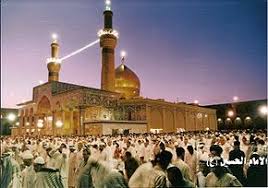
(1) TOMB OF THE PROPHET MUHAMMAD
AT MEDINA (2) THE CITY OF SHIRAZ
Sūrat al-madīna
= The Surah of
the City
This
fourth sura of the QA is entitled al-medina meaning, "the City".
This word occurs seventeen times in the Qur'an and in three different
addresses to the ahl; al-madinat, the "people" or
"inhabitants of the city". At first sight these poeple
might be either persons living in or around Medina or Shiraz.
The best known Islamic usage
of Madina (= Medina) is as the new designation of
the ancient settlement of Jews and others originally named Yathrib (
The mention of a "city" (al-madinat)
or the inhabitants or "the people of the City" first occurs in the
QA sura before QA4 (the Sura of the City) in QA3, the Surat
al-iman (see above) and perhaps gives a clue to which "city" is intended
: [37-38]
ا "Some of the
people of the City have declared, `We are the helpers of God
(anṣār Allāh)' ,
but when the Remembrance (al-dhikr) [the Bab] came suddenly [upon them], they
turned aside from helping Us (Q. 3:52). God, verily, is my Lord and your Lord,
the True One. So serve ye Him and this the [elevated] Path of `Alī
(the Bāb? ; ṣiraṭ `Alī /
`Alīyy) which is straight in the estimation of thy [sing.]
Lord (rabb; .cf. Q. 3:51)." (see SWB: add [adapted]) [38]
Exactly which "City" is
intended here is far from clear though it would seem much more likely to
be Shiraz, the birthplace and home of the Bab as well as the scene of
the revelation of the Qayyūm al-asmā'. In this city of Shiraz the Bab
undoubtedly had associates who might have offered to assist him in his
religious endeavors, than such persons as might have inhabited Medina in
Arabia! The people of the "city" are addressed in the
context of their eventual rejection of earlier promises of assistance
for the messianic Dhikr.
For the Bab the city par excellence which he came to
regard as the centre of future Babi pilgrimage was his House in the city
of Shiraz in southern Persian or Iran. This became the new Mecca as the
centre of Babi pilgrimage. The
above verses may imply that very early on some of his Shi`i-Shaykhi
associates in the city of Shiraz offered to aid, help or assist him in
his messianic cause but soon turned aside as when he announced that he
was in communication with the hidden imam or that the new age had "all
of a sudden" ( baghtat an = a qur'anic phrase) come to be
realized in unforeseen ways. Exactly what date we assign to the early
suras of the QA obviously has a bearing upon what we make of the verses
within early suras of the QA. The Bab had probably not yet been on pilgrimage and
so the implication is that the "city" with its unreceptive inhabitants
is Shiraz. The whole issue of ejection, faith and possible mubāhala (mutual execration) is
raised after the issue of the rejection by (some of the) the
inhabitants or people of the "city" in QA3.
It is in verse 18 of QA.4 the Surat al-Madinat (Sura of
the City) proper that the inhabitants of the "City" are addressed in the
following manner: [18] يا اهل المدينه
O people of the City!
The people of Shiraz are called upon to acknowledge the truth of the Bab's power of revelation otherwise they will be judged al-mushrikin ("polytheists") since he my be compared to the prophet Muhammad. The references to the "city" in QA3 and QA4 suggest that the Bab was mindful of the possible rejection of his contemporary Muslims who may not see him as the "servant of God" possessed of the power of divine revelation. A second address to the inhabitants of the "City" occurs in QA 4: 20ff. Its first two verses read: يا اهل المدينه و من حولها من الاعراب ما لكم كيف قد كفرتم بمحمّد بعد وفاته علی غير الحقّ جهاداً الم يأخذ اللّه و نبيّه عنكم عهداً فی وصاية وليّه فی مواطن من الارض علی الحقّ بالحقّ كثيراً
The reference to the "such of the Arabs as are around it" could perhaps equally apply to Shiraz as well as to Medina. A third address to the inhabitants of the "City" occurs in QA 4: 28f. Its first verses read: يا اهل المدينة
Here the Bab calls the people of the city to piety on the coming Day of God. The identity of the "City" and its people or inhabitants is still not clear. They tend to unbelief unaware of the bestowal of the blessings of the divine providence.
(5) Sūrat Yūsuf – Jospeh (QA 5 on Q. 12:4) = The Surah of Joseph
Qur'an 12:4 records the
dream-vision of Joseph:
The person and story of Joseph is important in both the Bible (Genesis 37-50) and the Qur'ān (surah 12:1-111). In these sacred books the account of this patriarch- prophet is the longest biblical / qur'ānic narrative, an aspect of the "best of stories" (aḥsan al-qaṣaṣ). In Sunnī and Shī`ī Islamic sources Joseph is pre-eminently a model of righteous piety (al-ṣiddiq) and a paragon of handsome beauty (ḥusn, jamāl). Among numerous other Abrahamic sources, this latter hagiographical motif is, for example, indicated in the Shī`ī Tafsir Nūr al-thaqalayn (`Commentary [expressive] of the Light of the Twin Weights') of al-Huwayzī (d. 1112/1700). Therein it is recorded that the sixth Twelver Imam, Abī `Abdu'llah, Ja`far al-Ṣādiq (d. c. 126/743) stated,
The Shī`ī imamological understanding of the Joseph narrative is registered in various authoritative Shi`i traditions (aḥadīth; khabar) and tafsīr works. Aspects of its sometimes non-literal (allegorical-typological... ) exegesis had messianic implications relative to the ghayba ("occultation") and eventual advent or "return" of the expected (hidden 12th) Imam. This provided the background to the non-literal Bābī-Bahā'ī interpretation of the Joseph narrative which often has eschatological, messianic and theophanological implications. The Bāb's interpretation of the motifs in the dream of Joseph go way beyond this Shī`ī interpretation expressed by Imam Ja`far al-Ṣādiq. In QA V, the dream-vision of Joseph (Q. 12:4) is cited and commented upon. There, among other things, it is asserted that God intended by Joseph the nafs, the "Logos-Self" of the Messenger (= Muhammad) and the "fruit of the [womb of the] the Virgin" (thamarat al-baṭūl) by which Fāṭimah's son, the martyred and expected to "return" [Imam] Ḥusayn (4/626-61/680) is intended. The "sun", "moon" and eleven "stars" seen by Joseph in his vision, symbolize Fāṭima (= "the sun"), Muhammad (= "the moon") and the [twelver] Imams (the first Imam `Alī (d.40/661) until the 11th Imam Ḥasan al-Askarī (d. 260/874) are kawākib, "the stars" of Q.12:7. In the QA the archetypal figure of Joseph is equated by the Bāb with both the messianic figures of the Qā'im ("Ariser") and the Qayyūm ("Self-Subsisting" Deity) who indirect eschatolgical theophany was expected. Joseph is equated typologically with Husayn and with the the Qayyum since the name Joseph and the word Qayyum have identical numerical values. The third Imam Ḥusayn becomes a messianic figure in Shi`ism since he was expected to return at the eschaton though historically he was martyred on the plain of Karbala in 61/680. These latter identifications are made in the fifth Surah of the QA which in some mss. is entitled the Surah of Ḥusayn as opposed to the Surah of Joseph. This fifth surah is the first surah of the QA which deals directly with the allegorical interpretation of the story of Joseph (QA.5). It is clear from QA5 that for the Bāb the twelve Imams are also representative of the 12 letters of the Islamic profession of faith, the kalimat al-tawḥīd, the Islamic affirmation of the Divine Unity, which is made up of 12 letters - la ilāha ilā Allāh ("There is none other god [Deity] but God'). This phrase is very important in the Bāb's writings, at times expressing the twin categories of negation ("There is no God") and affirmation ("but God"). See further : URL JOSEPH-YŪSUF in the Qayyūm al-asmā'
(10) Sūrat al-`Amā' (the "Divine Cloud") (QA 10 on Q. 12:9) QA 10 is entitled Sūrah al-`Amā’ where `amā’ most likely has a post-qur’anic theological sense such as `The Sura of the Divine Cloud’ as opposed to a forced and essentially misleading Qur’ānic based translation `The Sūrah of Blindness [of heart]’ for `amā’ occurs twice in the Qur’ān with this sense (see Q. 41:17 and 44). The sense of Divine Cloud is based upon the developed theological use of this term in an early cosmological ḥadīth as interpreted by numerous Sufis especially those of Ibn al-`Arabī and his school. The Great Shaykh made considerable creative reference to the `Hadith of `āmā' in his Futuhat al-Makkiyya (Meccan Openings-Revelations) and other writings.
(62) Sūrat al-Awliya' (the Intimates) (QA 62 on Q. 12:61) QA 62 is entitled Sūrat al-Awliyā’ (The Sūrah of the Saintly Intimates’) though in this Sūrah the Bāb is nor concerned with the saintliness of elevated awliyā’ (saints, sages, mystics) but their low estate as a result of their eschatological downfall or lack of receptivity. Only the QA context makes this clear.
(80) the Sūrat al-Zawāl (The Sūra of the Declension)
The title of QA (80) the Sūrat al-Zawāl (The Sūrah of the Declension) utilizes a verbal-noun which occurs only once in the Qur’ān. Derived from a verb zāla = `to go away, deviate, remove, decline’ (see Kassis, Concordance 1983:1332) it probably indicates the going down or `declension’ of the sun. Within this 80th Sūra the word zuwāl occurs twice, once in an address to the believers bidding them observe prayer at the time of the onset of the declension of the sun: يا ايّها المؤمنون
And once in an address to denizens or the “People of the Throne” يا اهل العرش اسمعوا ندائی من مركز الشّمس الطّالعة من مشرق الباب انّی انا اللّه الّذی لا اله الّا هو قد اختصصت بالحقّ ذكر الذّكر فی مطلع الشّمس و مغربها و علی الزّوال مركزها صلّوا عليه كما يصلّی الرّحمن لعبده و الملئكة حافّون حول الذّكر بذكره و هو اللّه كان بكلّ شیء شهيداً القتال Qitāl and الجهاد Jihād (`Engagement' and `Holy War') QA Sūras (from QA 95) constitute the most concentrated cluster of QA sūra titles. They are clear evidence that the Bab anticipated eschatological conflagration. There are four QA jihād ("Holy War" 2 + 2= 4) sura titles involving Qitāl, "conflagration", "slaughter" or "killing" which is also the title of six QA sura titles (3 pairs = 6). The four Jihād QA suras = (98)-(99)+(100)-(101) and six adjacent Qitāl QA sūras = (90)-(91) + (96)-(97) + (102)-(103), make up ten sūras relating to eschatological conflict. There are two sets of adjacent. duplicated, pairs of four QA suras in a row focused upon eschatological Jihād ("holy war"). These successive titles obviously underline the centrality of the imminent expectation of messianic, Imam led, apocalyptic `holy war'. Numerous Shi`i hadith (tradition) associate the onset of eschatological jihad with the Mecca-Medina region and with Karbala in Iraq where the shrine of the martyred Imam Ḥusayn (d. 61/680) is located.
To bring about eschatological change was central to the early mission of the Bab as representative of the hidden imam who will eventually bring about a new mulk or eschatological dominion (see QA1), an end-time theocracy. It should be noted here that the Bab cancelled the call for "holy war" in connection with a gathering in Karbala in 1845. In later years, despite the Babi conflicts in the late 1840s and early 1850s never seems to have called upon his followers to wage militant holy war. He never abandoned making reference to its theoretical, messianic-apocalyptic or "mythological" role of "holy war" but held back after 1845 from calling upon his followers to move in this direction. See further : Add URLs
|